

SEO can feel confusing when you’re new. People throw around terms like “search intent,” “topical authority,” “keyword clusters,” “E-E-A-T,” “crawl budget,” and “SERP volatility,” and it starts to sound like you need a degree just to write a blog post. But the reality is simpler: SEO is about helping search engines understand your content and helping people find useful answers quickly. If your content solves a real problem better than the alternatives, you have a strong foundation.
So where does AI fit into this? How AI helps with SEO is mainly about speed, structure, and smarter decision-making. AI tools can help you find topics, plan content, optimize pages, and improve your writing—without turning SEO into a technical nightmare. But AI isn’t a cheat code. It can’t guarantee rankings, and it can’t replace strategy, credibility, or genuine usefulness. What it can do is make the work more manageable and help beginners avoid common mistakes.
This beginner guide will walk you through how AI supports SEO in a practical way. You’ll learn what AI can do well, what you still need to do yourself, and how to use AI SEO tools without creating generic content that doesn’t rank.
What Does “AI for SEO” Actually Mean?
When we talk about AI and SEO, we’re usually talking about tools that use artificial intelligence to assist with SEO tasks. That includes things like generating content outlines, suggesting keyword variations, improving readability, writing meta titles and descriptions, identifying internal linking opportunities, summarizing competitor content patterns, and helping you organize topics into a content plan.
In simple words, AI helps you do three things faster:
It helps you research by summarizing what people search for and what search results are emphasizing. It helps you create by drafting and structuring content. And it helps you optimize by improving clarity, formatting, and on-page elements.
If you’re a beginner, this matters because SEO has many moving parts. AI tools reduce overwhelm by helping you break the work into steps and speed up the parts that take the most time.
Why AI Helps With SEO
SEO rewards consistency. The websites that grow over time usually publish useful content steadily, build topical depth, and improve pages based on feedback. Beginners often struggle with consistency because SEO content can be slow to produce. Research takes time. Outlining takes time. Writing takes time. Optimization takes time. Then you do it again.
This is where how AI helps with SEO becomes a practical advantage. AI can reduce the time it takes to create a high-quality first draft and a clean structure. That means you can publish more consistently and spend more time improving content quality, rather than getting stuck on the blank page.
AI also helps beginners develop better SEO habits. For example, it can prompt you to include an FAQ section, add clear headings, answer related questions, and structure content in a way that matches search intent. These are the types of details that improve user experience—and user experience is often what separates pages that rank from pages that disappear.
How AI Helps With Keyword Research
Keyword research is one of the first places beginners use AI, and it’s also one of the places where beginners misunderstand what’s happening.
A keyword is not just a word you repeat. A keyword represents a topic and an intent. When someone searches “how AI helps with SEO,” they’re likely looking for an explanation, use cases, and beginner-friendly steps. They’re not looking for an academic paper. If your content matches that intent, your chances improve.
AI tools can help with keyword research by generating:
- related keyword ideas and variations
- “people also ask” style questions
- supporting subtopics that belong in the article
- long-tail queries that match specific use cases
I’ll keep lists minimal as you requested, so think of it this way: AI helps you map the “topic neighborhood.” Instead of focusing on one keyword, you build a page that covers the concept thoroughly and naturally. That’s how modern SEO tends to work—especially for informational content.
AI is also helpful for identifying language your audience uses. Beginners often write in industry jargon. AI can help translate that into simpler terms and suggest more beginner-friendly phrasing.
The important caution: AI suggestions are not automatically accurate or automatically high-volume. Treat AI as an idea generator, then validate important keywords using your SEO tools or search results observation.
How AI Helps With Search Intent
Search intent is simply the “why” behind the query. Someone searching “best AI SEO tools” may want recommendations. Someone searching “how AI helps with SEO” likely wants an explanation and practical guidance. Someone searching “AI keyword clustering” wants a specific concept explained.
AI can help you identify intent by analyzing what current top-ranking pages seem to emphasize. It can summarize whether the results are mostly guides, lists, product pages, or tutorials. This is useful because beginners sometimes write a “review” style post for a query that needs a “guide” style post, or they write a short answer for a query that needs depth.
Intent alignment is one of the most underrated ways AI helps with SEO. It keeps you from writing the wrong article.
How AI Helps With Content Outlines
Outlines are where SEO content becomes readable. Many pages fail because they’re a wall of text or they jump between ideas randomly. Search engines and humans both prefer content that is well-structured.
AI is excellent at creating outlines quickly. You can ask an AI tool to build a beginner-friendly outline that covers the topic thoroughly, includes common questions, and follows a logical flow. Then you refine it.
The outline stage is also where you can inject originality. You decide which sections deserve more depth, what examples to use, what mistakes to warn about, and how to frame the topic in a way that’s genuinely helpful. This is how you avoid generic content.
A good outline also helps you naturally include secondary keywords. Instead of forcing keywords into paragraphs, you place them where they fit based on the section topic.
How AI Helps With Writing SEO Content
Let’s be honest: AI writing is one of the biggest reasons people talk about AI and SEO. The temptation is to generate a full article and publish it. That’s also the fastest way to create content that doesn’t rank—or worse, content that feels untrustworthy.
The best way to use AI for SEO writing is to treat it as a drafting assistant. It can write the first version, but your job is to:
Make it accurate. Add real examples. Add details that reflect experience and real-world nuance. Improve the introduction and conclusions. Ensure the article matches your brand tone and audience level.
Search engines increasingly reward content that feels genuinely useful and trustworthy. AI can help you write faster, but it cannot replace credibility. If you want long-term SEO results, you want content that readers actually appreciate, share, and reference.
AI is especially useful for rewriting. Beginners often write paragraphs that are too long, too unclear, or too formal. AI can help simplify and tighten language without losing meaning. That improves readability, which improves time on page—often a helpful signal.
How AI Helps With On-Page SEO Optimization
On-page SEO includes the elements on your page that help search engines understand your content and help users navigate it. AI can assist with many of these tasks:
It can suggest SEO-friendly headings, write meta titles and descriptions, propose internal links based on related content, and help you create concise summaries. It can also help you generate FAQ questions that match what beginners search for.
AI also helps you identify missing sections. For example, if your topic is “how AI helps with SEO,” readers often want practical use cases, common mistakes, and a workflow. AI can flag those needs and help you add them.
But the key is moderation. Over-optimizing can make content feel unnatural. The goal isn’t to “stuff” anything. The goal is to be clear, structured, and comprehensive.
How AI Helps With Content Refresh (A Hidden SEO Advantage)
Many SEO beginners focus only on publishing new content. That’s important, but updating old content can be just as powerful—sometimes more powerful—because the page already has some history.
AI can help you refresh content by:
Summarizing what needs updating, rewriting outdated sections, adding new subtopics, improving headings, and tightening paragraphs that don’t add value. It can also help you create better introductions that match current search intent.
This matters because SEO is not one-and-done. Search results change, competitors update their pages, and new questions emerge. Content refresh is how you stay relevant without constantly starting from scratch.

How AI Helps With Topic Planning and “Topical Authority”
One of the biggest shifts in SEO over the last several years is that ranking isn’t only about one page anymore. It’s about how your site covers a topic overall. When your website consistently publishes useful, connected content in a niche, it becomes easier to rank new pages. This is often described as topical authority, but you don’t need the buzzword. You just need the idea: depth + consistency + relevance.
AI helps here because planning a content ecosystem is hard for beginners. You might write one great article, then not know what to publish next. AI tools can help you map out related subtopics, supporting articles, and beginner-to-advanced progression. That means you’re not writing random posts. You’re building a connected library.
A helpful approach is to start with a “pillar topic” (a broad guide) and then create supporting articles that answer narrower questions. AI can suggest those narrower questions based on the main topic, and it can help you structure each supporting article so it truly answers the query rather than repeating generic definitions.
This is a key answer to how AI helps with SEO: it turns SEO into a more organized content strategy instead of a guessing game.
How AI Helps With Internal Linking and Site Structure
Internal links are one of the simplest SEO levers beginners ignore. Internal linking helps search engines discover your pages and understand how they relate. It also helps users navigate and stay on your site longer.
AI can assist internal linking in a very practical way. You can provide a list of your existing URLs (or paste your site map), and AI can suggest where links should be placed naturally. It can recommend anchor text ideas and identify where you’ve mentioned related concepts without linking to the relevant page.
This matters because internal linking is tedious to do manually, especially as your site grows. AI helps speed up the identification process. You still need to review the suggestions to ensure links are relevant and not forced, but it removes a lot of the time cost.
Internal linking is also a content quality improvement. When readers find answers across multiple pages, trust increases, bounce rates often decrease, and your site feels more complete. That user experience benefit is worth pursuing.
How AI Helps With SEO Writing That’s “Helpful”
A common beginner trap is thinking SEO writing means repeating keywords. That approach is outdated and tends to produce low-quality pages that readers ignore.
Modern SEO content tends to rank when it’s genuinely helpful, easy to read, and thorough enough to satisfy the query. AI can support this by helping you cover related questions and explain concepts clearly. It can also help you add structure through headings, summaries, and FAQ sections.
But there’s an important nuance: “helpful” content isn’t just long content. It’s content that answers the question properly and offers value beyond what’s already on the page one click above you.
If you use AI to write generic paragraphs that could apply to any website, you’re not creating a competitive page. The best way to use AI is to combine it with your own unique value—examples, experiences, templates, comparisons, real constraints, and a clear point of view.
Even in beginner guides, originality can be as simple as practical phrasing: what to do first, what not to do, and what “good” looks like. AI can help draft that, but you decide the final shape.
How AI Helps With Technical SEO
Technical SEO can sound intimidating. Beginners often assume they need to understand servers and code. In reality, many technical SEO wins are basic: improving page speed, fixing broken links, writing clean title tags, using proper headings, and making pages easy for crawlers to navigate.
AI won’t magically fix your site’s technical issues by itself. But it can help you diagnose and understand what issues mean, especially when you copy-paste error messages from tools into an AI assistant and ask for plain-English explanations.
It can also help you create checklists. For example, if you’re using WordPress, AI can help outline what to check for titles, headings, image alt text, and internal linking. It can even help you draft structured data text descriptions, though you should validate anything technical before implementing.
For beginners, the biggest value of AI in technical SEO is education and clarity. It reduces confusion, helps you prioritize fixes, and speeds up learning.
How AI Helps With Content Optimization for Featured Snippets and “People Also Ask”
Many SEO pages win extra visibility by appearing in featured snippets or by answering “People Also Ask” questions. You don’t have to chase these aggressively, but you can structure content so it’s eligible.
AI can help you identify common questions around a topic and craft concise answers. It can suggest where to add a short definition paragraph, where to include a step-by-step explanation, and what headings might align with question-style queries.
The key is readability. Snippet-friendly content often includes short, direct answers near the top, followed by deeper explanation. AI can help create those short summaries without removing the depth.
This is a practical way AI SEO tools support rankings: they help you format content for how people actually search and scan.
The Biggest Beginner Mistakes When Using AI for SEO
If you want AI to help your SEO rather than harm it, you need to avoid a few common mistakes.
One major mistake is publishing unedited AI content. First drafts tend to be generic. They often repeat common phrases and lack real detail. Search engines and readers both have endless alternatives now, so generic content struggles. The fix is simple: edit heavily, add examples, and strengthen clarity.
Another mistake is chasing too many keywords at once. Beginners sometimes try to rank one page for twenty different intents. That usually creates a messy article that doesn’t satisfy anyone. The better approach is one primary intent per page, with naturally related subtopics supporting it.
Another mistake is treating AI keyword suggestions as truth. AI can suggest terms, but it doesn’t always know what is actually searched or how competitive it is. Use AI for brainstorming, but validate with SEO tools or search result observation.
Another mistake is forgetting uniqueness. If your article says what every other article says, you’re not giving search engines a reason to rank you. You can create uniqueness by adding personal experience, niche-specific details, updated context, mini case studies, and practical steps that go beyond definitions.
A final mistake is ignoring the user experience. SEO is not only about ranking. It’s about what happens when someone lands on your page. If your content is hard to scan, too fluffy, or unclear, people leave. AI can help rewrite and structure for readability, but you need to care about the reader.
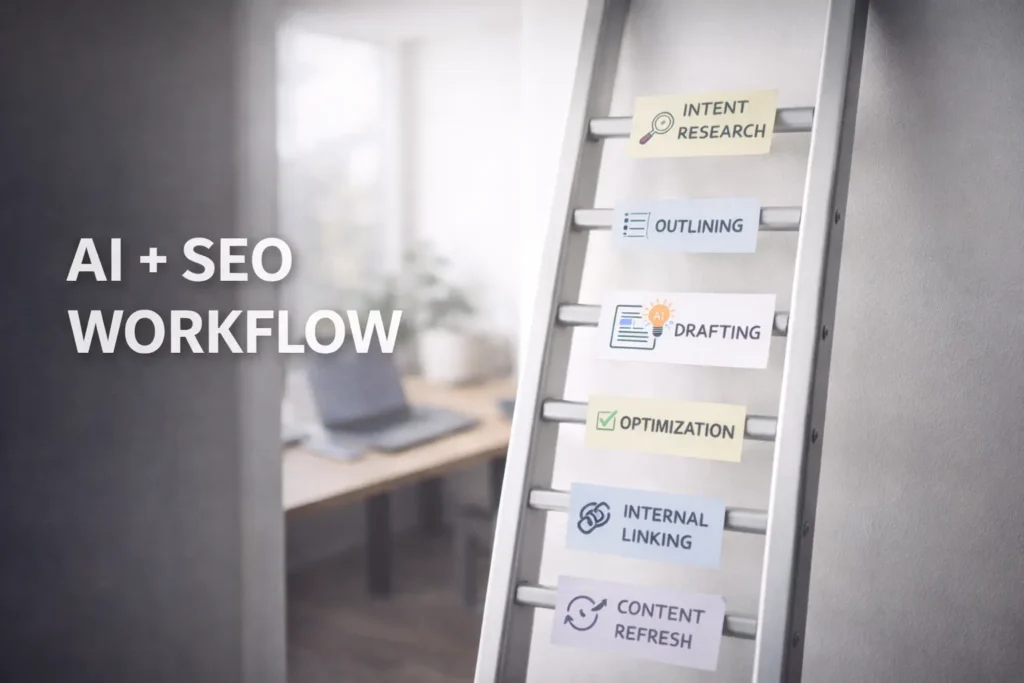
A Repeatable “AI + SEO” Workflow You Can Use for Every Article
Beginners do best with a simple process they can repeat. Here’s a practical workflow that uses AI tools in the right places without over-relying on them.
Start with search intent. Before writing, search your topic and observe the top results. Are they guides, lists, product pages, or tutorials? Then use AI to help you summarize what intent looks like for that keyword and what sections seem common. This sets your direction.
Next, build an outline with AI. Ask for a beginner-friendly outline that covers the topic thoroughly and includes related questions. Then refine it yourself. Decide where you can add unique value—examples, explanations, and practical steps.
Then draft section by section rather than generating the entire post at once. This produces better output and makes it easier to guide the tone. As you draft, keep asking AI to simplify, tighten, and improve readability.
After drafting, optimize on-page elements. Use AI to propose a meta title, meta description, and a few header alternatives. Add internal link suggestions. Add an FAQ section that directly answers beginner questions.
Finally, do a human edit pass. Check accuracy. Remove filler. Add your unique details. Ensure the article is genuinely helpful.
This process is the beginner-friendly version of how AI helps with SEO: it makes creation faster, structure better, and quality easier to maintain.
Final Thoughts
If you’re new to SEO, the biggest challenge is not learning every advanced concept—it’s building a consistent, useful content process. AI helps by speeding up research, improving structure, and making drafting easier. But your results still come from usefulness, accuracy, and intent alignment.
That’s the simplest truth behind how AI helps with SEO: it doesn’t replace the fundamentals. It makes the fundamentals easier to execute—again and again—until your site grows.
Frequently Asked Questions
AI helps beginners by making SEO tasks easier and faster. It can assist with keyword idea generation, search intent understanding, content outlining, drafting, on-page optimization (titles, meta descriptions, headings), internal linking suggestions, and content refresh. The biggest benefit is reducing overwhelm and improving consistency.
AI can help draft SEO articles, but ranking usually requires more than a draft. To compete, you need accurate information, clear structure, search intent alignment, and unique value. AI is best used as a writing assistant, while you add examples, experience, and editing to make the content genuinely helpful.
Not automatically. The risk isn’t “AI” itself—it’s low-quality, generic content. If you publish content that adds no value, it may struggle to rank regardless of how it was written. If you use AI to improve clarity and structure and you add real usefulness and originality, it can support SEO.
Choose tools based on your bottleneck. If writing is slow, use an AI writing assistant. If planning is hard, use tools that support topic mapping and content planning. If optimization is your issue, use on-page SEO tools that help with titles, meta descriptions, and technical checks. Start with one workflow, then expand.
No. AI can suggest keywords and related questions, but it doesn’t reliably provide search volume, competition, or ranking difficulty. Use AI for brainstorming and outlining, and use SEO tools for validation and competitive analysis.
AI can help write better headings, tighten paragraphs for readability, generate meta titles and descriptions, suggest FAQ questions, and propose internal link placement. These improvements help search engines understand your page and help users navigate content more easily.
AI can help explain technical issues and guide you through common fixes by translating error messages into plain language. It can also help create checklists and prioritize tasks. But you should still validate technical changes before implementing.
Use AI for structure and drafts, then add your unique value: real examples, niche-specific details, practical steps, and a clear point of view. Edit for clarity, accuracy, and voice. Avoid publishing first drafts and avoid trying to target multiple unrelated intents on one page.

Zahid Ali focuses on reviewing AI tools, marketing software, and funnel systems. His reviews break down real-world use cases, setup difficulty, pricing structures, and who each product is best suited for.