
Creating clear, simple blog outlines is one of the most powerful skills you can learn as a content creator. Whether you’re writing guides & tutorials, crafting how-to guides, or building long-form educational content, a well-structured outline makes writing faster, easier, and far more effective. In this detailed guide, you’ll learn how to create simple blog outlines that work for beginners, professionals, and anyone looking to improve their content creation workflow.
Introduction
If you’ve ever stared at a blank page wondering where to start, you’re not alone. Many beginners struggle with writing not because they lack ideas, but because they don’t know how to organize their thoughts. That’s where simple blog outlines come in—they give direction, structure, and clarity before you write a single sentence.
In the world of guides & tutorials, creating a blog outline is the foundation of clear communication. Without one, your content can easily feel scattered, confusing, or overwhelming. With one, you can create a polished article that flows naturally, reads beautifully, and keeps readers engaged from start to finish.
This guide will walk you step by step through the entire process so you can confidently create your own outlines for any how-to guide or tutorial.
What Is a Simple Blog Outline?
A simple blog outline is a structured plan that breaks down your blog post into organized sections and points. Think of it as a roadmap that shows you what to write, where to write it, and how each piece connects.
A simple outline usually includes:
- A working title
- An introduction idea
- Main sections (H2 headings)
- Subsections (H3 headings)
- Key points under each section
- A conclusion summary
It doesn’t need to be complicated. In fact, the best blog outlines are short, clear, and easy to follow.
How It Works
Creating an outline works by dividing your article into logical sections and guiding your brain to fill in details without effort.
Here’s the simple flow:
- Start with your topic – the main idea you want to explain.
- List major sections – the big components your blog should include.
- Add subsections – break the major sections into smaller steps or topics.
- Organize the flow – arrange your points in a logical order.
- Fill in key ideas – add notes, keywords, or examples under each point.
This method works especially well for how-to guides, tutorials, and any educational content because it helps you deliver information in a clear, step-by-step format.
Key Features & Benefits of Using Simple Blog Outlines
1. Better Writing Flow
A blog outline prevents writer’s block and helps you start writing immediately. You always know what comes next.
2. Faster Content Creation
Outlining speeds up drafting dramatically. Instead of thinking and writing at the same time, you plan first and write second.
3. Clearer Structure for Readers
Readers love organized content. Outlines help you create articles that are easy to scan and easy to follow.
4. Improved SEO and Keyword Placement
With an outline, you can plan where to place keywords such as:
- create simple blog outlines
- guides & tutorials
- how-to guides
- how to create simple blog outlines
You can place them naturally throughout headings and sections.
5. Enhanced Topic Coverage
Outlines prevent you from skipping important details or repeating yourself unnecessarily.
6. Reduced Editing Time
When the structure is solid, editing becomes faster and more efficient.
Practical Use Cases
Simple blog outlines are useful in many situations:
✔ For How-To Guides
Perfect for step-by-step instructions that require clarity and structure.
✔ For Tutorials in Any Niche
Whether you’re teaching writing, design, coding, or personal development.
✔ For Long-Form Articles
Outlines help organize large amounts of information into digestible sections.
✔ For SEO Content Strategies
Helps map keyword placement, internal links, and topic clusters.
✔ For Educational or Informational Blogs
Ensures your content is clear, logical, and easy to follow.
Step-by-Step Beginner Guide: How to Create Simple Blog Outlines
This is the heart of the guide. Follow the steps below to create your outline with confidence.
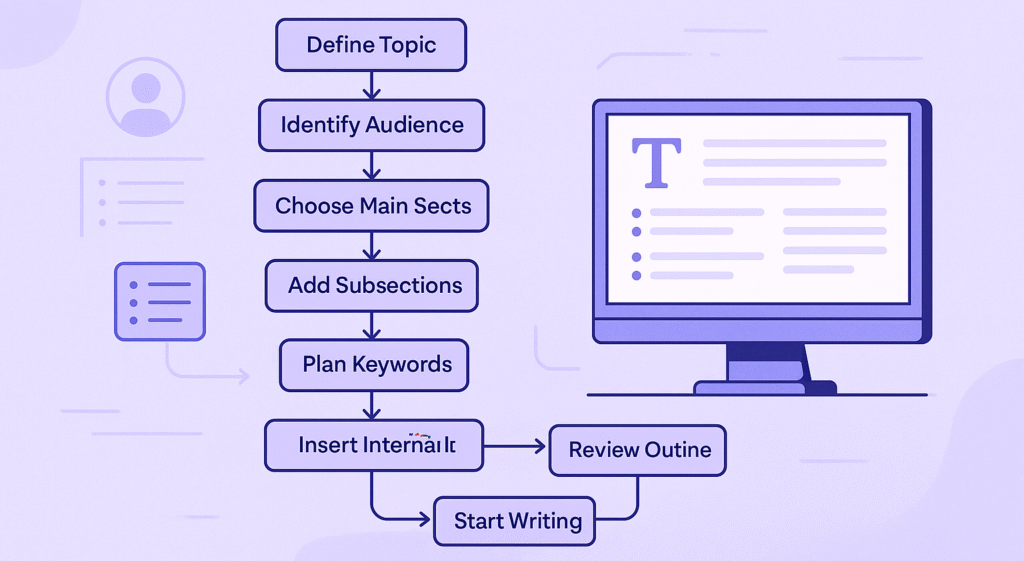
Step 1: Define Your Main Topic
Start with a clear idea of what your blog post is about.
Ask yourself: What do I want to teach, explain, or help someone with?
Example: “How to Create Simple Blog Outlines”
Step 2: Identify Your Audience
Understanding your readers will help you adjust tone, depth, and structure.
Consider:
- Are they beginners?
- Are they looking for quick steps or detailed tutorials?
- Do they prefer visuals, examples, or lists?
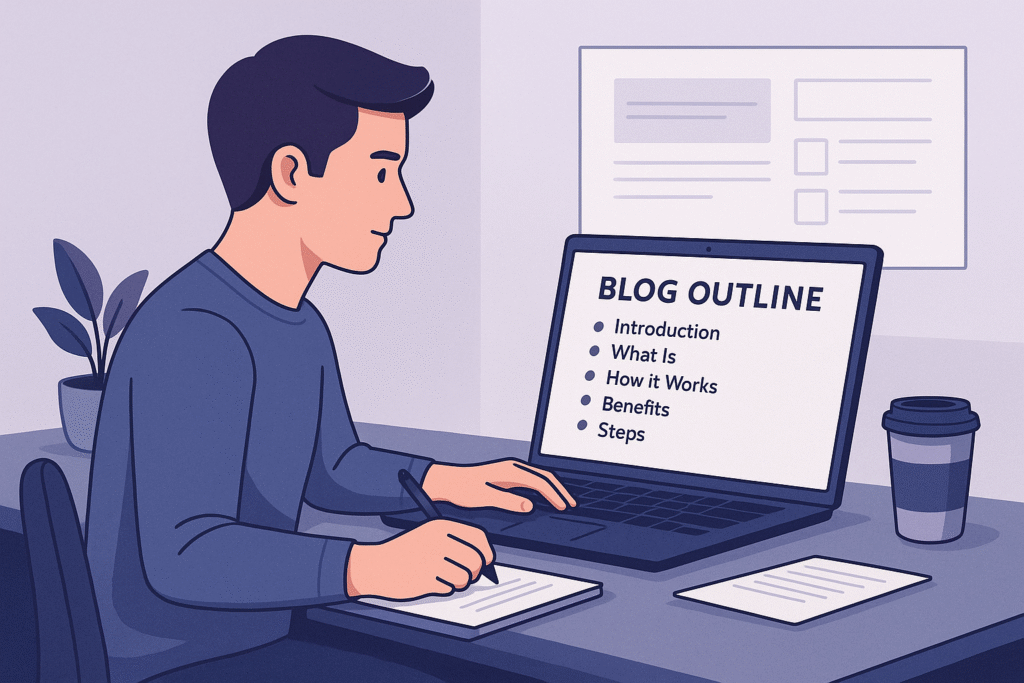
Step 3: Choose 5–8 Main Sections
These will become your H2 headings.
A typical structure includes:
- Introduction
- What Is
- How It Works
- Benefits
- Steps
- Examples
- Tips
- Mistakes
- Conclusion
Step 4: Break Each Section into Subsections
These will become H3 subheadings.
For example:
Under “Benefits,” add subsections like “Faster Writing” or “Better SEO.”
Step 5: Add Bullet Points
Under each subsection, briefly list what you will discuss.
Example:
- Simple structure
- Beginner-friendly
- Clear flow
Step 6: Plan Your Keywords
Include SEO terms naturally:
- create simple blog outlines
- how-to guides
- guides & tutorials
Use them across headings, paragraphs, and examples.
Step 7: Insert Internal Link Placeholders
Add links to other relevant sections of your website, such as:
Step 8: Review Your Outline
Ensure the flow is:
- Logical
- Clear
- Easy to follow
- Balanced in length
Step 9: Start Writing
Now that your blueprint is ready, writing becomes easy and stress-free.
Examples in Real Life
Example 1: A Travel Guide Blog Outline
- Intro
- What to Expect
- Best Places to Visit
- Travel Checklist
- Budget Tips
- Mistakes to Avoid
- Conclusion
Example 2: A Fitness Tutorial Outline
- Introduction
- Benefits of the Workout
- Step-by-Step Movements
- Safety Tips
- Beginner Modifications
- Common Errors
- Final Thoughts
Example 3: A Writing Tutorial Outline
- Hook
- What Is the Concept
- Why It Matters
- Steps to Apply It
- Real Writing Samples
- Tips for Improvement
- Closing Summary
These examples show that simple blog outlines work for any niche—the structure stays flexible while the content adapts.
Tips for Beginners
✔ Keep It Simple
You don’t need complex charts or long documents. A short outline is often more effective.
✔ Use Clear Headings
Your H2 and H3 headings should reflect the content clearly.
✔ Focus on One Idea per Section
Avoid mixing multiple topics in one section.
✔ Write Notes, Not Full Paragraphs
An outline should be lightweight and easy to scan.
✔ Prioritize Flow
Arrange your sections in the order that makes the most sense for the reader.
✔ Add Questions Your Readers May Have
These help you fill content gaps.
Common Mistakes to Avoid
❌ Making the Outline Too Long
Your outline should guide you, not overwhelm you.
❌ Skipping the Outline Entirely
Many beginners rush into writing and end up rewriting everything later.
❌ Adding Irrelevant Points
Stick to what supports your main topic.
❌ Forgetting Your Readers’ Needs
Your outline should match what your readers want to learn.
❌ Not Planning Keywords
SEO should be part of the outline—not an afterthought.
Advanced Insights (Optional)
For those who want to take their outline skills further, here are advanced methods:
1. Use Topic Clusters
Group related articles together to create an interlinked content network.
2. Add Visual Notes
Plan where images, graphics, or tables will go.
3. Build Templates
Once you’ve created several outlines, turn them into reusable templates.
4. Plan CTA Positions
Decide where to place calls-to-action to guide readers smoothly.
5. Consider Search Intent
Match your outline to what people want when searching for your topic.
Conclusion
Learning how to create simple blog outlines is one of the most important skills in writing effective guides & tutorials. A strong outline gives you clarity, saves time, improves structure, enhances SEO, and ultimately helps you produce high-quality content consistently.
Whether you’re building how-to guides, educational posts, or long-form tutorials, your outline is the key to turning ideas into powerful, reader-friendly articles. Follow the steps in this guide, practice them, and you’ll soon find that writing becomes easier, faster, and more enjoyable.
Frequently Asked Questions
Affiliate programs use tracking IDs and cookies to record user actions.
Some programs use server-side tracking or browser sessions.
Usually no — the program assigns the sale to one affiliate.
The links don’t usually expire, but cookies do.
Yes — most platforms allow affiliate links with proper disclosure.