
If you’ve been in affiliate marketing for more than a few weeks, you already know the pattern. You find an offer that looks solid, you build a page, you write emails, you maybe even set up tracking… and then traffic becomes the whole game. Not “any traffic,” either. The kind that lands on your page, reads for ten seconds, clicks around like a confused tourist, and disappears isn’t the problem you’re trying to solve. The problem is getting higher-intent traffic—people who behave like they’ve bought something online before, people who understand what a sales page is and aren’t shocked by a checkout button. That’s the exact pain point that kept pulling me back to systems that promise “buyers,” not browsers.
That’s why I decided to do a proper The Click Engine review based on real use. I tested it in a normal workflow: I routed traffic into a simple pre-sell page and watched what happened—click behavior, time on page, opt-ins, and whether the flow felt like it was sending humans with intent or just random clicks. I wasn’t trying to “hack” it. I wasn’t expecting miracles. I just wanted to know one thing: is this a buyer traffic system that can help an affiliate marketer get traction without burning money on ads?
What I found was more nuanced than the hype. The Click Engine isn’t a magical faucet that guarantees sales. But it also isn’t the usual junk traffic you get from exchanges or generic “traffic” gigs. The strongest part of it is the intent profile: the traffic behaves more like people who live inside the MMO ecosystem (funnels, offers, upgrades, digital products). If that’s what you promote, it can be a useful piece in your traffic mix—especially if you’re starting out and need a steady stream of real visitors to test offers and improve your pages.
—————[Visit Official Page]——————-
What The Click Engine Is (And Who It’s Actually For)
The Click Engine is positioned as a buyer traffic system—a service that sends traffic to your chosen page with the idea that these visitors are more purchase-ready than typical cheap clicks. You subscribe, you submit a link, and the system promotes that link inside its own ecosystem.
The biggest mistake people make when judging tools like this is thinking it’s meant for every niche. It’s not. Based on how it’s marketed and how the traffic behaves, The Click Engine is built for a very specific audience: people who already consume online marketing offers, digital products, and “make money online” style systems. That matters because “buyer traffic” doesn’t mean “every visitor will buy.” It means the visitors come from an environment where buying digital products is normal.
✅So who is it for?
It’s for affiliates who are promoting marketing tools, traffic products, list building systems, DFY funnels, and similar offers where the audience already understands the ecosystem. It’s also for beginners who want to avoid the big early hurdles: paid ads, complicated targeting, and technical setup. If you can write a decent pre-sell page and you understand how to place a call-to-action, you can use it.
❌Who is it not for?
If you’re in a niche where buyers need trust over time—local services, high-ticket coaching, medical/health claims, or anything that requires deep credibility—this is not the best starting point. You’ll get more value building content, collecting leads, and nurturing.
In simple terms: The Click Engine is best treated as a conversion-focused traffic utility for the MMO/affiliate product world, not a general traffic solution for every business model.
My Testing Setup (What I Did, What I Expected, What I Measured)
For this The Click Engine review, I ran a clean, realistic test. No fancy tools, no exotic tracking stack, no complicated funnels. I used what most people can build in an afternoon.
My goal wasn’t to “prove” anything with wild numbers. It was to see whether the traffic had the behavioral signals of buyer-intent visitors: scrolling, clicking, reading, and taking the next step.
Here’s the setup:
I created a simple pre-sell page in a marketing tools niche. The page had a clear headline, a short story-style intro, and two CTAs—one above the fold and one after the main explanation. I tested two variants during the period: one that pushed people straight to the offer page, and another that offered a quick “cheat sheet” opt-in before the offer. That second version was important because lead generation is often the hidden win with traffic systems like this—you may not get instant buyers, but you can capture leads and convert later.
What I expected going in:
- I expected some amount of low-quality clicking because most “traffic” services have that.
- I expected the first few days to be inconsistent as the system places the link and it rotates.
- I expected that the traffic would only “make sense” if the offer matched the audience.
What I measured:
I watched session behavior: scroll depth, bounce patterns, and where people clicked. I also watched whether visitors hit the CTA and whether opt-ins happened at a reasonable rate compared to cold social traffic. Those are the most useful signals in the early stage because you can optimize them even before you see sales.
I also made one rule for myself: I didn’t change the page every day. If you constantly tweak headlines and buttons, you never learn anything. I gave each variant a fair run so I could compare intent instead of noise.
Core Features Explained Through Use (Not a Feature Dump)
A lot of reviews list “features” like a checklist: easy setup, buyer traffic, done-for-you… and then they move on. That doesn’t help you decide.
Here’s what matters in real use.
✅ The link submission model
The Click Engine is basically a promotion system where your submitted page gets exposure within their ecosystem. In practice, this means you’re not “running ads” and you’re not manually doing outreach. You’re plugging into a traffic loop that already exists.
✅ It prefers bridge pages (and that’s actually a good thing)
In my test, the biggest performance difference wasn’t “how much traffic” I got. It was how well my bridge page converted the traffic that arrived. A clean bridge page—simple promise, simple proof, clear CTA—made the clicks feel more valuable.
This is why tools like this work better for marketers who understand funnels at least at a basic level. You don’t need to be a pro. But you do need to give visitors a reason to click the next step.
✅ It can be used for lead generation, not just direct sales
If your only success metric is immediate sales, you’ll judge it too harshly. The hidden upside I saw was that opt-in traffic behaved like people who understand “give email to get the thing.” That’s a huge signal in affiliate marketing traffic. If the system can feed you leads that you can follow up with, you’re building an asset instead of gambling on single-click conversions.
✅Consistency beats volume
This is one of those points that feels boring until you’ve tested traffic systems. Many sources can give you bursts. The Click Engine felt more like a steady faucet. That’s more useful for optimization because you can actually improve your page and see if it helped.
✅ Bonus access can be valuable—but only if you use it strategically
Most traffic tools throw bonuses at you. In this case, the bonus angle is usually “memberships” or related access. Bonuses only matter if they help you do something: build a list, improve a page, create an offer angle, or get more placements. Don’t buy for bonuses. Buy for the traffic utility, and treat bonuses as extras.
How The System Actually Works (A Simple Mental Model)
The easiest way to understand The Click Engine is to stop thinking about it like “ads” and start thinking about it like “placement.” You submit a page, and your page gets shown/promoted inside an environment where people are already used to clicking offers.
That matters because it changes the job you have to do.
With Facebook ads or Google ads, your job is targeting, creative testing, and compliance. With SEO, your job is content, authority, and patience. With The Click Engine, your job is page relevance and conversion. You’re not buying targeted impressions the same way. You’re getting placed into a stream.
Here’s what that looks like in a normal workflow:
You pick an offer that fits the audience. You write a page that frames the offer in plain language—what it is, who it’s for, what it does, and why someone should care. You place a strong CTA. You submit that page. Then you watch behavior and optimize like a conversion marketer.
If your page is weak, the traffic feels weak. If your page is clear and focused, the traffic feels much more “buyer-like,” because the visitors are already accustomed to offers. The system doesn’t do the conversion work for you. It delivers the opportunity.
This is also why people get polar opposite experiences with it. The system can send the same type of visitors to two different marketers, and one says “it works” while the other says “it’s junk.” The difference is usually the bridge page and offer match.
—————[Visit Official Page]——————-
Traffic Quality & Intent: How I Judge “Buyer Traffic” vs Junk Clicks
“Buyer traffic” is a marketing term. What you really want is signals of intent. Here’s how I judge it, and this applies to any affiliate marketing traffic source.
First, I look at scroll behavior. Junk clicks bounce instantly or barely move. Higher-intent visitors tend to scroll, pause, and reach the mid-page section. In my test, The Click Engine traffic behaved closer to “email list traffic” than “social scroller traffic.” It wasn’t perfect, but it wasn’t the mindless bouncing you see from exchanges.
Second, I look at click patterns. Junk traffic clicks everything randomly. Buyer-intent traffic clicks where it makes sense—buttons, links, or proof sections. The Click Engine traffic clicked CTAs in a way that felt intentional, especially when the CTA was framed as “see details” rather than “buy now.”
Third, I look at opt-in willingness. This is a huge indicator. People who have never bought online tend to hesitate at email opt-ins. The traffic here felt more accustomed to opt-ins. That’s not a guarantee of sales, but it’s exactly the behavior you want if you’re building a list.
Fourth, I look at time distribution. With junk traffic, sessions are mostly under a few seconds. With intent traffic, you see a healthier spread—some short visits, some long reads. That’s what I saw once my page was optimized.
So, are they “real buyers?” They’re real people with buyer-ecosystem familiarity. That’s the realistic interpretation that matches my experience and explains why it can work.
What I Liked (Specific Wins From Real Use)
I’ll keep this balanced. There were things I genuinely liked because they solve practical problems.
The first is speed to testing. If you’re a marketer who gets stuck in building mode—rewriting pages, tweaking design, changing tools—this kind of traffic flow forces you into execution. You can’t hide. You submit a page and you see whether people respond. That’s valuable because it turns marketing into measurable feedback.
The second is the intent profile. I wouldn’t call it “magic,” but it was noticeably different from random cheap clicks. If you’ve bought traffic before, you know how rare that is at the low end.
The third is it works well with simple funnels. You don’t need a complex multi-page setup. A single strong pre-sell page can work if you understand how to frame the offer.
The fourth is it encourages better marketing habits. This sounds odd, but it’s true. When traffic is steady, you stop chasing “more” and start improving “better.” You tweak the hook, the proof, the CTA. You become a conversion marketer.
The fifth is the low-risk feeling. Most traffic learning curves are expensive. This is not. That doesn’t mean it’s guaranteed. It means you can afford to test it without needing a big bankroll.
What I Didn’t Like (Limitations You Should Know)
No tool is perfect. The Click Engine has limitations you should understand before you buy.
The biggest limitation is offer sensitivity. If you promote offers outside the core ecosystem, you may not get the response you want. The traffic is not universal. It’s not like targeted ads where you can dial in demographics and interests.
The second limitation is you don’t control the source. With paid ads, you know where the traffic comes from. With SEO, you know it’s search. Here, you’re plugging into an ecosystem. That’s fine if you’re using it as one traffic channel, but it’s risky if it becomes your only channel.
The third limitation is results depend heavily on your page. Beginners sometimes want a system that “does everything.” This isn’t that. It’s a traffic mechanism. You still have to do the marketing. If your page is unclear, pushy, or badly structured, the traffic won’t save you.
The fourth limitation is not ideal for brand building. If your long-term plan is to build a strong brand presence, SEO and list building are more foundational. The Click Engine can complement those, but it won’t replace them.
Those are not deal-breakers, but they’re real constraints that separate a useful traffic tool from a fantasy.
The Click Engine Pricing & Value: How to Evaluate It (Without Obsessing Over Numbers)
People often search for The Click Engine pricing, and the reason is obvious: they want to know if it’s worth adding to their stack.
Even if pricing changes, the correct way to evaluate value is the same:
You’re not paying for “traffic.” You’re paying for the ability to run quick tests and access a stream of higher-intent visitors. So you should judge it by whether it helps you achieve one of these outcomes:
- You get consistent clicks that let you improve your page and offer selection.
- You get leads that you can follow up with and monetize later.
- You get enough conversions to justify keeping it in your mix.
If you’re a beginner, the best use is usually learning: testing messaging, learning how to pre-sell, learning how to build a clean CTA. If you’re intermediate, the best use is validation: finding offers that convert before scaling with ads or SEO.
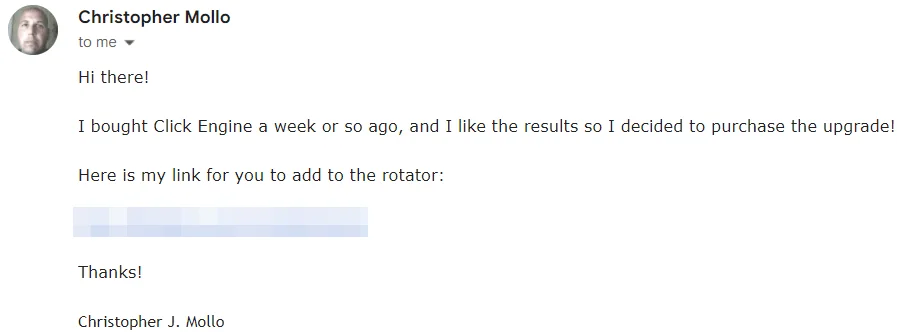
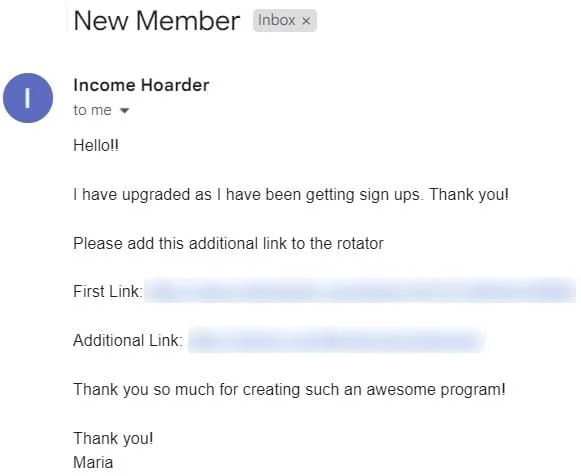
—————[Visit Official Page]——————-
As for The Click Engine bonuses, treat them as optional. Bonuses can add value if they help you build assets—pages, funnels, emails—but don’t let bonuses be the reason you buy. The core question should be: does the traffic quality justify the subscription?
The Click Engine Bonuses (What You Actually Get)
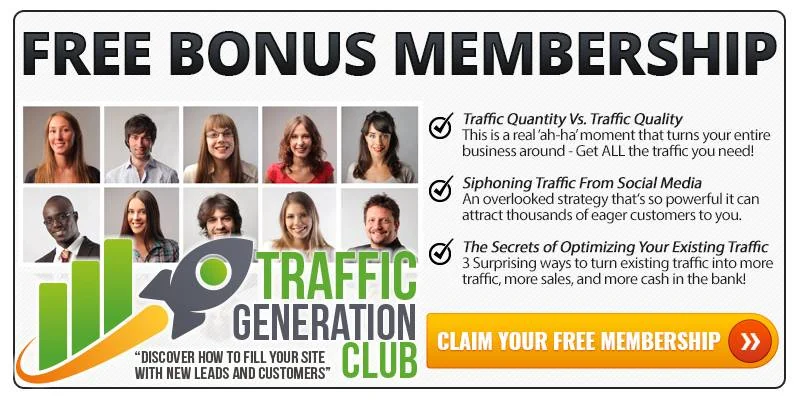
Bonus #1 – Traffic Generation Club
Bonus #2 – Affiliate Profits Club
Bonus #3 – eMarketersClub
Bonus #4 – Membership Marketers Club
Bonus #5 – Power Copy Club
Bonus #6 – Power Marketers Club
Bonus #7 – Wealth Upgrade Club

Bonus #8 – Web Profits Club
Who Should Buy It vs Who Should Skip It
This section matters because a lot of reviews try to sell everyone. That’s not reality.
You should consider buying if you are:
A beginner who wants to get moving without learning ads immediately, and you’re willing to build one decent pre-sell page and test offers like a marketer instead of a gambler.
An affiliate promoting offers in the marketing tools/MMO space, where the audience already understands digital purchases and funnels.
Someone who needs a steady stream of visitors for testing. This is ideal if you want to improve conversion rates, refine messaging, and stop guessing.
A marketer building a list who wants a low-friction source of opt-in traffic to feed your follow-up sequences.
You should probably skip it if you are:
Promoting a niche that requires slow trust building and heavy credibility, where quick traffic doesn’t translate to conversions.
Expecting the tool to “make sales for you” without you writing decent copy or structuring a page.
Someone who refuses to test and optimize. If you want one button that prints money, you will be disappointed by every legitimate marketing tool on the planet.
The Click Engine Alternatives
People often search for The Click Engine alternatives because they want a backup plan or they want to compare models. I’m not going to name competitor products here since you didn’t provide names, but I can outline the most relevant alternative types so you understand what you’re choosing.
1) Solo email drops / newsletter blasts
These can send big bursts, but quality varies wildly. Some lists are great, many are tired. You usually pay more upfront and you have to test sellers carefully.
2) Paid ads (search/social/native)
The most scalable, but also the most expensive and skill-dependent. Great if you have tracking, creative, compliance knowledge, and a budget for testing.
3) SEO and content marketing
Slow but durable. If your plan is to build a long-term site, SEO is the foundation. It won’t give you instant testing traffic, but it builds an asset that compounds.
4) Influencer or community placements
Promotions inside relevant communities can be high intent, but they require relationships and credibility.
5) Building your own email list from scratch
This is the endgame. It’s also the hardest at the start because you need traffic to get leads, then leads to get sales. A buyer traffic system can help you bridge that early gap.
The Click Engine sits in a specific lane: faster than SEO, cheaper than ads, and more structured than random “traffic gigs.”
Frequently Asked Questions
Yes, if you can create a simple page and follow basic instructions. You don’t need advanced tools, but you do need a clear offer angle.
Marketing tools, affiliate systems, traffic and lead gen products, DFY funnels—anything aligned with buyers used to digital products.
You need a destination page (a review page, bridge page, or capture page). A full “website” isn’t required, but having one helps.
Yes. In fact, capturing leads can be one of the smartest ways to make the traffic profitable long-term.
You’ll see traffic behavior relatively quickly, but meaningful results depend on testing your page, offer match, and your follow-up.
No. It can complement them. Ads and SEO are still the main scalable and durable channels.
Then treat it like a conversion problem, not a traffic problem. Improve your headline, simplify the page, and strengthen your CTA positioning.
The best way to interpret it is higher-intent visitors within the MMO ecosystem. Not every visitor will buy, but the behavior is generally more purchase-aware than random traffic.
Yes. That’s one of the best use cases—validate offers before you invest bigger effort into SEO or ads.
No. Use it as one channel while you build more durable assets like SEO content and your own email list.