
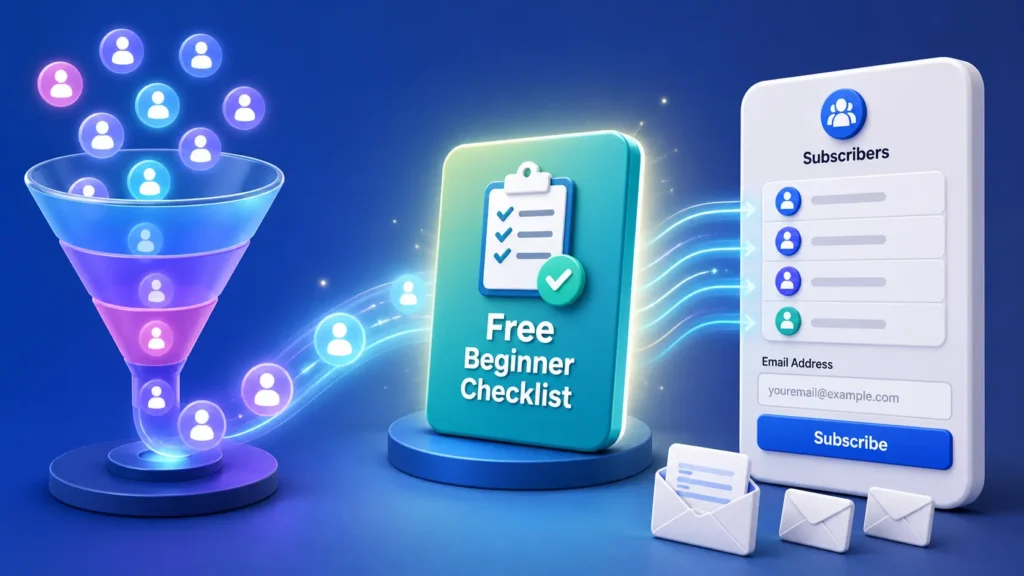
Are people visiting your website but leaving without taking any action?
That can feel frustrating. You may publish helpful content, share posts, or run ads, but most visitors still leave. Many of them don’t buy. They don’t contact you. They don’t remember your brand later.
This is where how lead magnets work becomes important.
A lead magnet gives visitors a clear reason to share their email address. In return, they get something useful. That could be a checklist, guide, template, discount, quiz result, free training, or resource sheet.
The idea is simple. You offer value first. Then you earn permission to keep in touch.
Lead magnets are not magic. A weak offer won’t fix a poor website or unclear message. But a strong lead magnet can turn silent visitors into real subscribers. From there, you can build trust, send helpful emails, and guide people toward your product or service.
This beginner guide explains how lead magnets work in plain English.
1. How Lead Magnets Work by Offering a Clear Value Exchange
A lead magnet works because both sides get something useful.
The visitor gets a helpful resource. The business gets a new email subscriber or lead. That trade is called a value exchange, but the idea is very simple. People share contact details when the offer feels worth it.
Most visitors will not join a list just because you say, “Subscribe to our newsletter.” That phrase feels vague. People already receive too many emails. They need a better reason.
A good lead magnet answers one quiet question in the visitor’s mind:
“What do I get right now?”
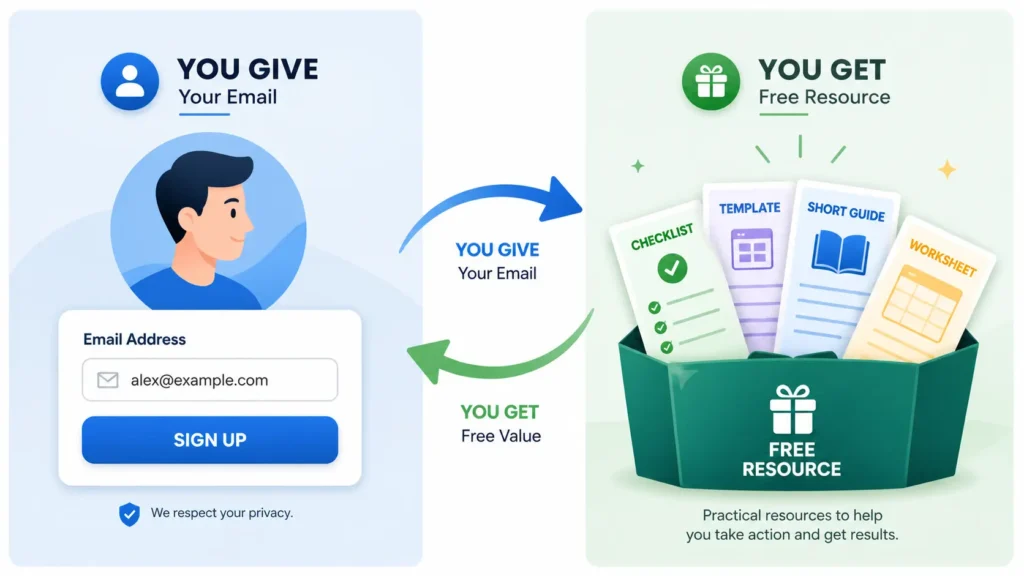
For example, a person reading about budgeting may want a free monthly budget template. A person learning email marketing may want a welcome email checklist. A person comparing software may want a buying guide.
The offer must feel specific. A clear offer feels easier to trust.
A strong value exchange feels fair
People protect their inboxes. They don’t want random emails. They don’t want spam. They don’t want a fake promise.
So, your lead magnet must make the exchange feel fair.
A fair exchange has three parts:
- The offer solves a real problem.
- The signup form explains the benefit clearly.
- The follow-up emails match the original promise.
If your lead magnet promises a simple checklist, deliver that checklist fast. If you promise weekly tips, send tips that fit the topic. Trust starts with that first small promise.
Beginners often try to make lead magnets too big. They think a 60-page ebook will impress people. But many visitors prefer quick help. A short, useful resource often works better than a long file nobody reads.
The best lead magnet helps people take one useful step.
2. How Lead Magnets Attract the Right Audience
A good lead magnet does more than collect email addresses. A good lead magnet attracts people who match your business.
That matters because not every subscriber is useful.
You don’t need a huge list full of random people. You need people who care about your topic, problem, product, or service. The right lead magnet acts like a filter. It pulls in people with a clear interest.
For example, imagine you sell beginner-friendly SEO services. A lead magnet called “Free Marketing Tips” may attract anyone. But a lead magnet called “10-Point SEO Checklist for Small Business Websites” attracts a better audience.
The second offer tells you something about the subscriber. That person likely owns a website. They care about search traffic. They may need help improving rankings.
That makes future emails easier to write.
Specific lead magnets bring better leads
Specific offers work because they match specific intent.
A visitor searching for “how to start meal planning” may want a weekly meal planner. A visitor reading about home workouts may want a beginner workout chart. A visitor comparing insurance options may want a simple comparison checklist.
The closer your lead magnet is to the visitor’s current problem, the better it usually performs.
Here are a few examples:
- A finance blog can offer a monthly budget spreadsheet.
- A fitness coach can offer a 7-day beginner workout plan.
- A software site can offer a feature comparison worksheet.
- A real estate agent can offer a home-buying checklist.
- A marketing blog can offer an email subject line swipe file.
Each offer attracts a different type of person. That is the point.
A focused lead magnet helps you build a focused email list.
3. How Lead Magnets Turn Website Visitors Into Subscribers
Most website visitors leave without doing anything. That’s normal. People get distracted. They compare options. They browse and move on.
A lead magnet gives visitors a reason to pause before they leave.
The process usually looks like this:
- A visitor lands on your page.
- The visitor sees a helpful free offer.
- The offer matches the visitor’s problem.
- The visitor enters an email address.
- Your system delivers the lead magnet.
- The visitor joins your email list.
That process turns a one-time visit into a longer relationship.
Without a lead magnet, many visitors disappear forever. With a lead magnet, you have a way to keep helping them.
Placement matters more than beginners think
A great lead magnet can fail if visitors never see it.
You need to place the signup offer where attention already exists. Don’t hide your form at the bottom of a forgotten page. Put the offer near relevant content.
Good places include:
- Near the top of a blog post
- Inside the article body
- At the end of a helpful guide
- On a dedicated landing page
- In the website sidebar
- On the homepage
- In a respectful popup
The best placement depends on your website. A blog may use inline forms. An ecommerce store may use a discount popup. A service business may use a landing page with a checklist or consultation guide.
The form should be simple. Ask only for what you need. For most beginners, an email address is enough. A first name can help with personalization, but extra fields may lower signups.
Make the first step easy.
4. How Lead Magnets Build Trust Before the Sale
Many people need trust before they buy.
They may like your content, but they still have doubts. They may wonder if your advice works. They may compare you with competitors. They may not feel ready yet.
A lead magnet helps you start that trust-building process.
The visitor gets a small sample of your help. If the resource is clear and useful, the person starts to believe you can help with bigger problems too.
That first experience matters.
If the lead magnet feels rushed, confusing, or thin, trust drops. If the resource solves a small problem well, trust grows.
Helpful lead magnets reduce doubt
People often hesitate because they don’t know enough yet.
A good lead magnet can answer early questions. It can show the next step. It can make a hard topic feel simpler. This helps the subscriber feel more confident.
For example, a tax consultant might offer a small business deduction checklist. The checklist doesn’t replace paid help. But it shows the consultant understands the reader’s problem.
A course creator might offer a free lesson. The lesson gives the subscriber a sample of the teaching style. If the lesson feels clear, the person may trust the full course more.
A software company might offer a setup guide. The guide shows the product has a simple path. That can lower fear before signup.
Lead magnets work best when they help first and sell second.
That doesn’t mean you should hide your offer forever. You can promote your paid product or service later. But the first goal is to prove value.
Trust makes the sale feel less forced.
5. How Lead Magnets Fit Into an Email Funnel
A lead magnet is usually the first step in an email funnel.
An email funnel is just a planned series of emails. These emails help new subscribers understand your brand, learn more, and decide what to do next.
That may sound technical, but the beginner version is simple.
Someone downloads your lead magnet. Then they receive a few helpful emails. Those emails continue the same topic. Later, you introduce a relevant offer.
This works because the subscriber already showed interest.
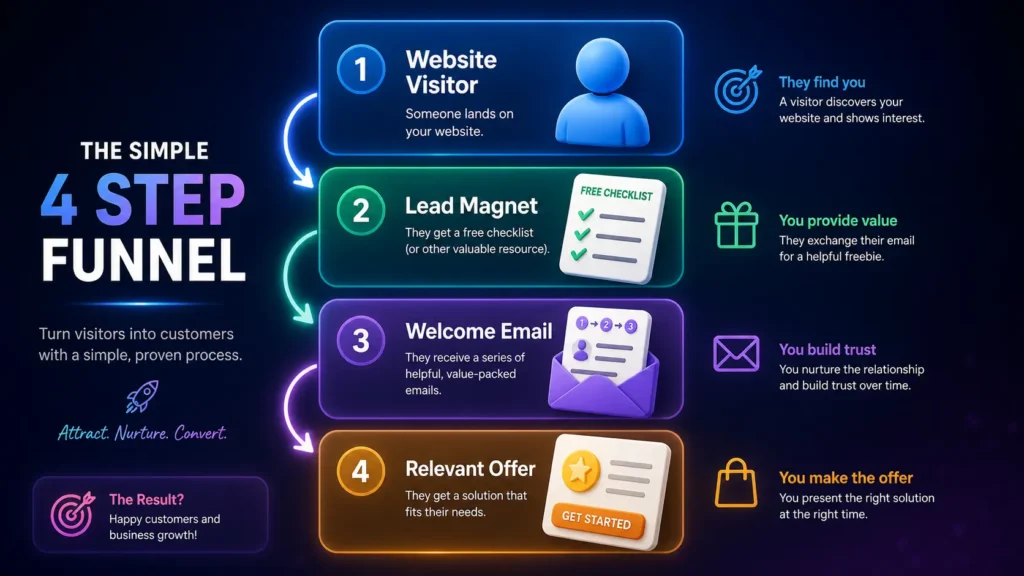
A simple beginner funnel
You don’t need a complex system at the start. A basic funnel can work well.
Here is a simple example:
- Email 1: Deliver the lead magnet and welcome the subscriber.
- Email 2: Share one helpful tip related to the lead magnet.
- Email 3: Explain a common mistake beginners make.
- Email 4: Share a short story, example, or case study.
- Email 5: Introduce your product, service, or next step.
This sequence gives people time to understand your value. The offer does not appear out of nowhere. The emails create context.
For example, say your lead magnet is a “Website Launch Checklist.” Your email sequence could explain homepage structure, common launch mistakes, basic SEO, and how to review a site before publishing. Then you can mention your website audit service.
That feels natural because the offer fits the journey.
A funnel should not pressure people. A good funnel guides them.
6. How Lead Magnets Help You Learn About Your Audience
Lead magnets also teach you about your audience.
When people sign up for a specific offer, they reveal what they care about. When they click certain links, they show interest. When they reply to your emails, they give direct feedback.
This information can improve your content and offers.
For example, if many people download a beginner checklist, your audience may need simple starting points. If many people download a comparison guide, they may be close to buying. If many people download templates, they may prefer practical tools over long lessons.
These clues help you make better decisions.
You can test different lead magnet ideas
You don’t need to guess forever. You can test simple offers and watch what happens.
Try one lead magnet for a few weeks. Then try another. Compare signup rates, email engagement, replies, and sales. The best offer is not always the one you like most. The best offer is the one your audience finds useful.
You can test:
- A checklist versus a short guide
- A template versus a video
- A quiz versus a PDF
- A discount code versus a buying guide
- A webinar versus an email course
Keep the test simple. Don’t change too many things at once. If you change the offer, headline, form, and page design together, you won’t know what caused the result.
Small tests can reveal useful patterns.
Audience learning is one hidden benefit of lead magnets. You don’t just build a list. You learn what your market wants.
7. How Lead Magnets Support Long-Term Business Growth
Lead magnets help build an asset that grows over time.
That asset is your email list.
Social media reach can change. Search traffic can move. Ad costs can rise. But your email list gives you a direct way to reach people who asked to hear from you.
This does not mean email is perfect. People can unsubscribe. Emails can land in spam. Open rates can drop. Still, a clean and engaged list gives you more control than many other channels.
A strong lead magnet helps that list grow with the right people.
A list creates repeat chances
Most people don’t take action after one visit. They may need more time, more education, or a better moment.
Email gives you repeat chances to help them.
You can send new guides, product updates, helpful stories, seasonal offers, and important announcements. You can bring people back to your website. You can invite them to a webinar. You can ask what they need next.
Those repeat touchpoints build familiarity.
Familiarity matters because people buy from sources they remember and trust. A lead magnet starts that relationship in a simple way.
Over time, a well-built list can support many goals:
- More website traffic
- Better product launches
- More service inquiries
- Stronger affiliate promotions
- More repeat buyers
- Better audience feedback
The lead magnet starts small. The long-term value comes from what happens after the signup.
That’s why beginners should not treat a lead magnet as a one-time trick. Treat the lead magnet as the front door to a better customer relationship.
What Makes a Good Lead Magnet?
A good lead magnet is useful, specific, and easy to consume.
The best offer solves one narrow problem. The person should understand the value within seconds. If the offer needs too much explanation, the promise may be too broad.
A good lead magnet usually has these traits:
- It solves one clear problem.
- It gives a quick win.
- It matches the page topic.
- It attracts the right person.
- It feels easy to use.
- It leads naturally to your paid offer.
For example, “The Complete Guide to Better Marketing” feels too broad. “5 Email Subject Lines for Your First Welcome Sequence” feels more specific.
Specific wins because the reader can picture the result.
You should also think about the next step. A lead magnet should connect to your main offer. If you sell website design, a free website checklist makes sense. If you sell meal plans, a grocery list template makes sense.
Random freebies may grow your list, but they may not grow your business.
Common Types of Lead Magnets for Beginners
There are many types of lead magnets. Beginners should start with simple formats. A simple offer is easier to create, deliver, and improve.
Checklists
Checklists work well because they are quick and practical. People like checking off steps. A checklist can help them avoid mistakes and finish a task faster.
Examples include a blog post checklist, moving checklist, skincare routine checklist, or website audit checklist.
Templates
Templates save time. They work well when your audience needs help creating something.
Examples include email templates, budget spreadsheets, content calendars, proposal templates, or meal planners.
Short Guides
Short guides help explain a topic in a focused way. They should not feel like a long textbook.
A good short guide answers one main question. For example, “Beginner’s Guide to Choosing a CRM” is clearer than “Everything About Business Growth.”
Quizzes
Quizzes can work well when people want a personal result. A quiz can help users choose a product, plan, style, or next step.
For example, a skincare brand may offer a skin type quiz. A finance site may offer a budget style quiz.
Discounts
Discounts work well for ecommerce stores. A simple offer like “Get 10% off your first order” can turn visitors into buyers and subscribers.
But discounts are not the best fit for every business. Some audiences want guidance more than savings.
Lead Magnet Mistakes Beginners Should Avoid
Lead magnets can fail for simple reasons. Most mistakes come from unclear offers or poor follow-up.
Making the offer too broad
A broad offer attracts weak interest. People respond better to a clear promise. Try to solve one small problem instead of many problems at once.
Asking for too much information
Long forms can scare people away. At the beginner stage, ask for only what you need. Usually, an email address is enough.
Delivering a weak resource
The lead magnet should feel worth the signup. Don’t send a thin PDF that says what everyone already knows. Give the subscriber something useful.
Forgetting the follow-up
Many beginners create a lead magnet, collect emails, and then stay silent. That wastes the opportunity. Send a welcome email and continue the conversation.
Attracting the wrong people
Freebies can attract people who only want free stuff. Make sure your offer connects to your niche and paid offer. Relevance matters more than volume.
How to Create Your First Lead Magnet
You can create your first lead magnet without making the process complicated.
Start with your audience’s most common beginner problem. Then create a small resource that solves one part of that problem.
Ask yourself:
“What does my reader need before they can take the next step?”
If you run a fitness site, the answer may be a simple weekly workout plan. If you run a finance blog, the answer may be a budget worksheet. If you run a marketing site, the answer may be a content planning template.
Once you choose the idea, keep the format simple.
Write a one-page checklist. Create a basic Google Sheet. Record a short video. Build a simple PDF guide. The format matters less than the usefulness.
Then create a signup form with a clear headline. Tell people exactly what they get. Deliver the resource by email. After that, send a few helpful follow-up emails.
That is enough to begin.
You can improve later.
FAQs About How Lead Magnets Work
What is a lead magnet in simple words?
A lead magnet is a free resource you offer in exchange for contact details. Most businesses ask for an email address. The resource helps the visitor solve a small problem.
Do lead magnets still work?
Yes, lead magnets still work when the offer is useful and specific. People still share email addresses when they believe the resource will help them. Weak, vague offers perform poorly.
What is the best lead magnet for beginners?
The best beginner lead magnet is usually a checklist, template, short guide, or worksheet. These formats are easy to create and easy for subscribers to use.
How long should a lead magnet be?
A lead magnet should be as long as needed, but no longer. Many strong lead magnets are one to five pages. A quick, useful resource often beats a long ebook.
Can I use one lead magnet for my whole website?
Yes, you can start with one lead magnet. As your site grows, you may create different lead magnets for different topics. More specific offers often bring better subscribers.
Conclusion
Lead magnets work because they create a simple trade.
Your visitor gets something helpful. You get permission to keep in touch. That small exchange can turn a one-time visit into a real relationship.
For beginners, the best lead magnets are clear, useful, and easy to consume. They solve one problem. They match the visitor’s interest. They lead naturally into your emails, content, product, or service.
You don’t need a huge guide or complex funnel to start. Choose one audience problem. Create one helpful resource. Place the offer where visitors can see it. Then follow up with emails that continue to help.
That’s how lead magnets work in real life.
Small value first. Trust next. Sales later.

Zahid Ali focuses on reviewing AI tools, marketing software, and funnel systems. His reviews break down real-world use cases, setup difficulty, pricing structures, and who each product is best suited for.