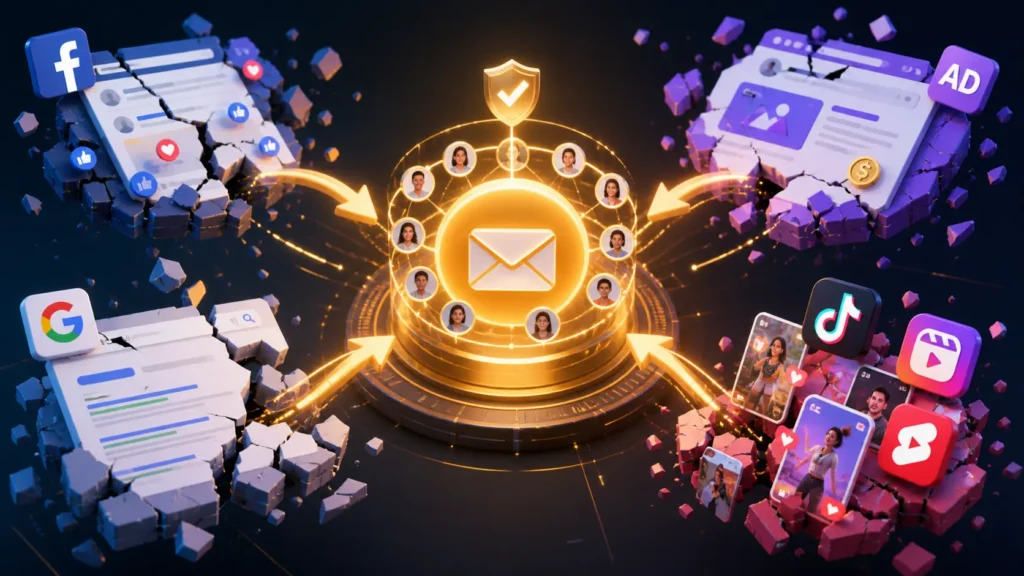
Have you ever worked hard to grow your audience, then watched your reach drop overnight?
Many business owners, creators, bloggers, and marketers know that feeling. A social platform changes its rules. A search update shifts traffic. An ad account gets restricted. A post that used to bring leads suddenly brings nothing.
That’s why building an email list still matters.
An email list gives you a direct line to people who chose to hear from you. You don’t have to hope an algorithm shows your message. You don’t have to pay every time you want to reach your own audience. You can send useful content, build trust, and guide people back to your website, offer, or brand.
Email may seem old compared with social media, short videos, and paid ads. But email still solves a simple business problem: staying connected with people who already showed interest.
And that connection is worth building.
Why Building an Email List Still Matters Today
Building an email list still matters because digital attention is unstable. People scroll fast. Platforms change often. Search traffic can rise or fall without warning.
Email gives your audience a more private place to hear from you. Your message lands in a space they check for work, shopping, updates, bills, and personal notes. That doesn’t mean every email gets read. But email still gives you more control than most public platforms.
When someone joins your list, they take a small step toward trust. They say, “I’m interested enough to hear more.” That matters. A follower may forget you in a busy feed. A subscriber gives you permission to stay in touch.
For small websites and growing brands, that permission can become a real asset. You can share new articles, promote products, announce offers, send guides, and bring people back when you need them.
A good email list is not just a collection of addresses. It’s a group of people who have raised their hands.
Email Gives You More Control Than Social Media
Social media can help people discover you. But social media should not be your only home.
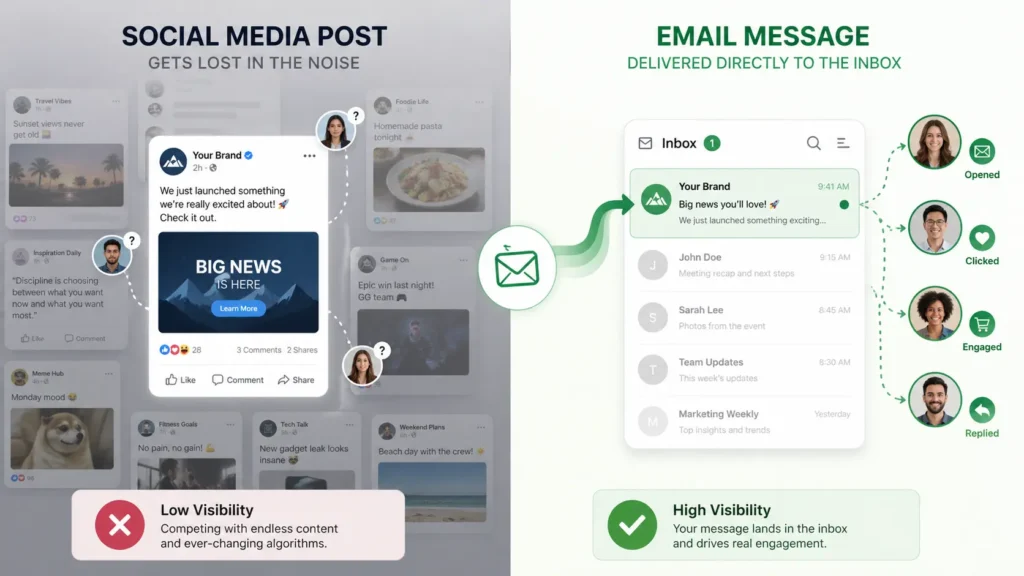
A platform owns the feed. A platform decides what gets shown. A platform can reduce your reach, limit your account, or change its content format. You may spend years growing followers, then struggle to reach them without paying.
Email works differently. You still depend on email providers and inbox rules, but you own the relationship more directly. You can export your list. You can move to another email service. You can create your own sending schedule.
That control matters when your content supports a business.
Think about a simple example. You publish a helpful blog post. You share the post on social media, and only a small part of your audience sees it. But when you send the same post to your email list, your subscribers get a direct chance to open it.
That doesn’t mean email replaces social media. The better approach is simple:
- Use social media for discovery.
- Use your website for depth.
- Use email for long-term connection.
This mix gives you more balance. You’re not depending on one channel for everything.
An Email List Builds Trust Over Time
Most people don’t buy, subscribe, or contact you the first time they see your content. They need time. They need proof. They need to feel safe.
Email helps with that slow trust-building process.
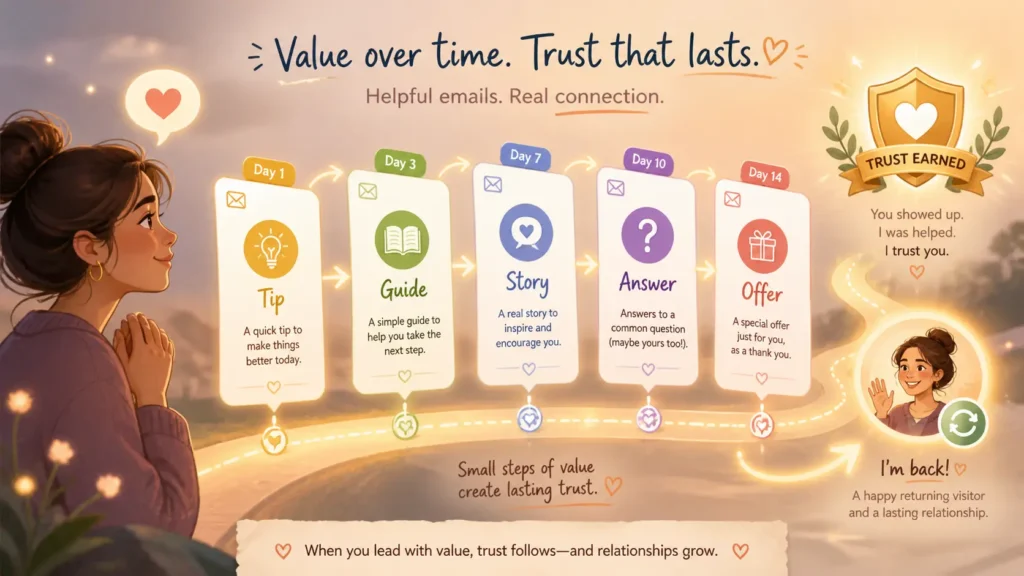
A visitor may read one article and leave. But if that visitor joins your email list, you can keep helping them. You can send tips, stories, product updates, case examples, or useful resources. Each useful message adds a little trust.
The key word is useful.
People don’t join email lists because they want more noise. They join because they expect value. If your emails solve small problems, explain confusing topics, or save them time, your name becomes familiar.
Trust often grows through repeated small moments. One helpful email may not change much. Ten helpful emails can change how someone sees your brand.
This is why email works well for businesses with longer buying cycles. Coaching, software, online courses, services, affiliate sites, health content, finance topics, and B2B offers often need more than one touchpoint.
Email gives you room to educate before you sell.
Email Helps Turn Visitors Into Returning Readers
Website visitors are easy to lose.
Someone may find your article through search, read for three minutes, and close the tab. They may like the content but never remember your domain. That’s normal. The internet gives people too many choices.
An email list gives you a way to bring those visitors back.
For content websites, this is very powerful. A returning reader is more valuable than a random visitor. Returning readers are more likely to trust your advice, click your links, share your content, and explore your offers.
You can use email to send:
- New blog posts
- Weekly tips
- Product updates
- Helpful checklists
- Seasonal guides
- Personal notes
- Limited-time offers
The goal is not to push people every day. The goal is to stay useful and visible.
A small list of loyal readers can often outperform a large number of cold visitors. Cold visitors need more convincing. Returning readers already know your voice.
That familiarity makes every future visit easier.
Email Supports Better Sales Without Hard Selling
A good email list can support sales in a calm, natural way.
Many businesses make the mistake of only emailing when they want money. That trains subscribers to ignore them. A better approach is to give value first and sell when the offer makes sense.
For example, a fitness coach might send helpful workout tips for several weeks. Then the coach can introduce a paid program. The offer feels connected because the reader already received value.
A software company might send short lessons about a common problem. Later, the company can show how its tool saves time. The sale feels helpful because the content created context.
This works because email lets you build a path.
A simple path may look like this:
- A visitor joins your list for a useful free guide.
- They receive a welcome email.
- They get helpful content for a few days.
- They learn more about the problem.
- They see a relevant product or service.
- They decide when they’re ready.
That flow feels better than shouting “buy now” at strangers.
Email also gives you space to answer objections. You can explain pricing, benefits, common mistakes, comparisons, and real use cases. A social media caption often can’t do that well.
Email lets you slow the conversation down.
Email Lists Help Small Brands Compete
Big brands often have bigger ad budgets, larger teams, and wider reach. Small brands need smarter channels.
Email can help level the field.
A small business doesn’t need millions of subscribers. A few hundred engaged people can make a real difference. If those people trust your advice, your list can drive traffic, sales, referrals, and repeat business.
This is especially useful for niche websites and affiliate projects. Search traffic may bring first-time visitors. Email can help keep those visitors connected. When you publish a new review, comparison, buying guide, or helpful resource, your list can give that content early traction.
Small brands also have one clear advantage: a more personal voice.
You don’t need to sound like a large company. In fact, you shouldn’t. A clear, honest, human tone often works better. People like hearing from someone who understands their problem.
That’s where email shines. Your message can feel direct. You can write like a person, not a public announcement.
Email Marketing Is Cost-Effective
Paid ads can work, but they can also get expensive fast. Social media growth can take time. Search engine traffic often needs months of content and patience.
Email marketing usually costs less once you build the list.
You may pay for an email marketing tool. You may spend time writing newsletters. You may create lead magnets or signup forms. But once someone joins your list, you can reach that person again without paying for each click.
That makes email useful for long-term marketing.
Of course, email is not free in a practical sense. You still need strategy, writing, testing, and list care. But compared with paid traffic, email can offer strong value over time.
The real benefit comes from repeat contact.
A paid ad may bring one visit. An email subscriber can return many times. They may read your blog, buy a product, join a webinar, reply with feedback, or share your offer with someone else.
That long-term value is the reason many serious businesses keep email at the center of their marketing.
Email Gives You Better Audience Insights
An email list can teach you what your audience cares about.
You can see which subject lines get opened. You can see which links get clicked. You can learn which topics bring replies. You can notice what people ignore.
These clues can improve your content strategy.
For example, if subscribers click articles about beginner mistakes, you may create more beginner-friendly content. If they ignore advanced guides, your audience may not be ready for those topics yet. If people reply with the same question, that question may become your next article, product, or FAQ.
Email also lets you ask directly.
A simple question can reveal more than a dashboard. You can ask what your readers are struggling with. You can ask what they want to learn next. You can ask why they joined your list.
This feedback helps you write better content and create better offers.
Many brands guess what their audience wants. Email gives you a chance to listen.
Email Protects You From Traffic Drops
Every online channel has risk.
Search engines update their systems. Social platforms change reach. Ad costs rise. Accounts get reviewed. Trends move quickly. A strategy that works today may weaken later.
An email list helps reduce that risk.
If your website traffic drops, you can still contact your subscribers. If your social reach falls, your list remains active. If ads become too expensive, email can support lower-cost sales.
This doesn’t mean email removes all risk. You still need strong deliverability, good content, and clean list practices. But an email list gives you a backup channel that many businesses wish they had built earlier.
This becomes more important as your brand grows.
A website without an email list depends too much on outside traffic. A website with an email list can create its own traffic bursts. You can send readers to new pages, new offers, or important updates.
That kind of control is valuable.
A Strong Email List Improves Launches
Launching anything is easier when people already know you.
A new product, service, course, website section, podcast, or offer needs attention. If you launch only to a cold audience, you must work harder. If you launch to subscribers, you start with people who already showed interest.
Email gives you a warm audience for launch moments.
You can prepare subscribers before the launch. You can explain the problem. You can share behind-the-scenes details. You can answer common questions. Then, when the offer goes live, the launch feels expected.
This works for small launches too.
You don’t need a huge product release. You may launch a new guide, a seasonal sale, a free workshop, or a newsletter series. Your list gives you a starting point.
That starting point can create early clicks, replies, sales, and momentum.
Without an email list, every launch can feel like starting from zero.
Email Makes Personalization Easier
Not every subscriber wants the same thing.
Some people are beginners. Some are ready to buy. Some want tips. Some want product comparisons. Some only care about one topic.
Email lets you group people based on interest or behavior. This is often called segmentation, but the idea is simple: send more relevant messages to the right people.
For example, a website about online business might have subscribers interested in:
- SEO
- Email marketing
- Affiliate marketing
- Website design
- Paid ads
Sending the same message to everyone may still work sometimes. But sending more specific emails often works better.
Personalization doesn’t need to feel creepy. You don’t need to overdo it. You only need to respect what people care about.
If someone downloads a beginner guide, send beginner-friendly tips. If someone clicks product reviews often, send comparison content. If someone buys from you, send support and next steps.
Relevant emails feel helpful. Random emails feel like clutter.
Email Encourages Deeper Relationships
Social media often rewards quick reactions. Email can support deeper attention.
A subscriber may read your email during breakfast, at work, or before bed. They may reply with a question. They may save your message. They may forward it to a friend.
That kind of attention is harder to get in a busy feed.
Email also feels more personal because the message arrives in an inbox. A good email can sound like one person speaking to another. That tone builds connection.
This matters when your business depends on trust.
People often buy from brands they remember and believe. They click links from sources they trust. They recommend people who helped them. Email gives you repeated chances to become that trusted source.
The relationship does not grow from clever subject lines alone. The relationship grows from being useful, honest, and consistent.
What Makes an Email List Worth Building?
Not every email list is valuable.
A large list with low interest can become expensive and weak. A smaller list with real engagement can perform much better. Quality matters more than size.
A healthy email list has a few clear traits.
Subscribers Join for a Clear Reason
People should know what they’ll get. A vague signup form like “join our newsletter” may not be enough. A clearer promise works better.
For example:
“Get one simple SEO tip every Friday.”
“Download the beginner checklist.”
“Get weekly meal ideas for busy families.”
“Learn how to choose the right software without wasting money.”
Clarity helps the right people join.
Emails Arrive Consistently
You don’t need to email every day. But you should not disappear for months.
A simple weekly or biweekly schedule works for many brands. The best schedule depends on your audience and your content. The main goal is to stay familiar without becoming annoying.
The Content Matches the Signup Promise
If people joined for beginner tips, don’t send only hard sales emails. If they joined for product updates, don’t send random personal stories every week.
The signup promise creates expectations. Good email marketing respects those expectations.
The List Stays Clean
Old, inactive, or fake addresses can hurt performance. A clean list helps your emails reach real people.
You don’t need to obsess over every number. But you should remove clear dead weight over time. This keeps your list healthier and easier to manage.
How to Start Building an Email List the Right Way
Starting an email list does not need to be complicated.
You need a useful reason for people to subscribe, a simple signup form, and a basic email sequence. The goal is to start with value, not complexity.
Choose a Clear Audience
Before you collect emails, know who you want to help.
A list for “everyone” is hard to write for. A list for new bloggers, busy parents, local homeowners, small business owners, or budget travelers is easier to serve.
Clear audience focus makes your emails stronger.
Create a Useful Signup Offer
People need a reason to share their email address.
Your signup offer can be simple. You don’t need a huge ebook or complex course. A practical resource often works better.
Good options include:
- A checklist
- A short guide
- A discount code
- A template
- A free email course
- A weekly tips newsletter
- A comparison sheet
The best offer solves one small problem quickly.
Place Signup Forms Where People Already Pay Attention
Don’t hide your email form.
Place signup forms on your homepage, blog posts, footer, sidebar, and resource pages. You can also use exit-intent popups, but keep them respectful. A bad popup can annoy readers before they trust you.
The form should be easy to understand. Tell people what they get and how often they’ll hear from you.
Send a Strong Welcome Email
The welcome email matters because people are most interested right after joining.
Use that moment well. Thank them for subscribing. Deliver the promised resource. Explain what kind of emails they’ll receive. Invite them to reply with a question if that fits your brand.
A good welcome email sets the tone.
Keep Your Emails Useful
After the welcome email, keep helping.
Share one clear idea per email. Use short paragraphs. Write like you’re talking to one person. Avoid stuffing each message with too many links or topics.
Useful emails train subscribers to open the next one.
Common Email List Mistakes to Avoid
Email marketing works best when you respect the reader. Many list-building mistakes come from rushing the relationship.
Buying Email Lists
Buying a list may sound like a shortcut, but it usually creates problems. Those people didn’t ask to hear from you. They may ignore your emails, mark them as spam, or damage your sender reputation.
Build your list with permission instead.
Sending Only Promotions
If every email asks for a sale, people stop listening.
Promotions are fine when they make sense. But your list also needs education, tips, stories, answers, and helpful updates. Give people reasons to stay subscribed between offers.
Using Misleading Subject Lines
A subject line should create interest, not trick people.
If the subject promises one thing and the email delivers another, trust drops. You may get an open once, but you lose long-term attention.
Ignoring Mobile Readers
Many people read emails on phones. Long blocks of text can feel heavy on a small screen.
Use short paragraphs. Keep sentences clear. Make links easy to tap. Test your emails before sending them.
Waiting Too Long to Start
Many website owners wait until they have more traffic, more products, or a perfect strategy. That delay costs them subscribers.
You can start small. A simple form and a useful welcome email are enough for the first step.
Email Works Best With Other Channels
Email is powerful, but email should not stand alone.
The best online strategy connects email with your website, search traffic, social media, paid ads, and content marketing. Each channel plays a role.
Search can bring people who are looking for answers. Social media can help new people find you. Paid ads can speed up testing. Your website can explain topics in depth. Email can bring people back and build trust over time.
This creates a stronger system.
For example, a blog post can attract search visitors. A signup form can turn some visitors into subscribers. A welcome sequence can build trust. Later emails can send readers back to new posts or offers.
That loop supports growth.
Without email, many visitors leave and never return. With email, your best content gets more chances to work.
Why Email Still Feels Personal
People often say inboxes are crowded. That’s true. But personal space is exactly why email still matters.
A person’s inbox is not the same as a public feed. People use email for important messages. They receive receipts, appointments, work updates, newsletters, and family notes. When your email earns a place there, your brand becomes part of a more focused space.
The challenge is earning that place.
You earn it by being clear, helpful, and consistent. You don’t need to write perfect emails. You need to send messages that respect the reader’s time.
A good email feels like a helpful note. A bad email feels like an interruption.
That difference decides whether subscribers stay or leave.
The Long-Term Value of Building an Email List
The real value of an email list grows with time.
At first, your list may feel small. Ten subscribers may not seem exciting. Then ten becomes one hundred. One hundred becomes one thousand. Over time, your list becomes a direct audience you can reach again and again.
That audience can support many goals.
You can use your list to grow traffic, test ideas, sell products, promote services, collect feedback, and build authority. You can also use email to understand your market better.
The best part is that email compounds.
Each new subscriber adds to the asset. Each useful email strengthens the relationship. Each reply teaches you something. Each campaign gives you data. Each launch starts with a warmer audience.
This is why smart marketers still care about email. Not because email is trendy. Because email continues to work when you treat people well.
FAQs About Building an Email List
Is email marketing still effective?
Yes, email marketing is still effective when the list is built with permission. Email works because subscribers already showed interest. The results depend on your content, offer, sending habits, and audience quality.
How big should my email list be before I promote something?
You don’t need a huge list to promote something. A small, engaged list can produce better results than a large, cold list. Focus on trust and relevance first. Then promote offers that match your subscribers’ needs.
How often should I email my list?
Many brands do well with one email per week. Some audiences prefer more. Some prefer less. Start with a schedule you can maintain. Watch opens, clicks, replies, and unsubscribes to adjust.
What should I send to my email list?
Send content that helps your audience solve real problems. You can share tips, guides, stories, product updates, case examples, blog posts, and offers. Keep each email focused on one main idea.
Can I build an email list without a website?
Yes, but a website makes the list stronger. You can collect emails through landing pages, social profiles, events, or checkout forms. Still, a website gives subscribers a place to learn more and trust your brand.
Conclusion
Building an email list still matters because online attention is hard to control.
Social platforms change. Search rankings move. Ad costs rise. But an email list gives you a direct way to reach people who chose to hear from you.
A strong list helps you build trust, bring readers back, support sales, learn from your audience, and protect your business from traffic drops. You don’t need a perfect system to start. You need a clear promise, a useful reason to subscribe, and a habit of sending helpful emails.
Start small if needed. But start early.
Your future audience is easier to serve when you have a way to reach them.

Zaid Akhtar specializes in traffic tools, lead generation systems, and online business programs. He evaluates offers based on long-term usefulness, learning curve, and value for money, not just flashy features.